
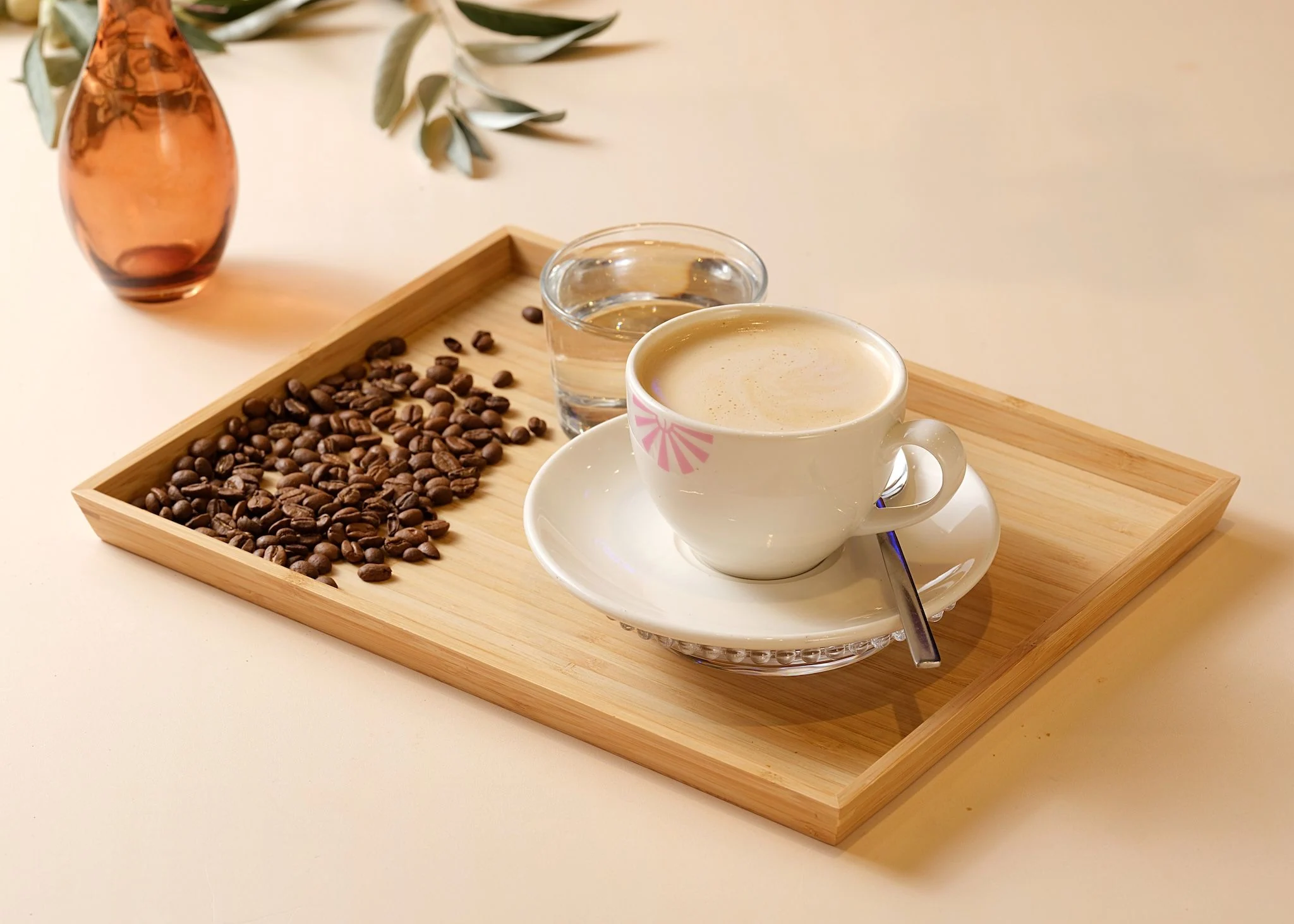
The cup does not need to touch your nose
Hold the cup at a comfortable distance, take a short smell and move away. If steam feels intense, wait briefly so details are easier to separate.
You are collecting a first impression, not performing a professional tasting; no immediate description is required.
Begin with one broad aroma family
Instead of searching for dozens of precise notes, choose a broad family. Does it suggest roast, cocoa, nuts, fruit or spice? Everyday descriptions such as “sweet-smelling,” “warm” or “lively” are useful too.
Aroma memory is personal: one cup may suggest cocoa to one guest and toasted bread to another.
Keep smell and taste as separate observations
The nose receives volatile aromas, while the tongue and mouth help us notice basic tastes and texture. Coffee that smells fruit-like is not necessarily sugary. A roasted aroma does not guarantee that the drink will taste bitter.
Choose one word for smell, then sip and describe mouthfeel separately: “cocoa aroma, light texture.”
Notice the aromas around the table
Perfume, food or another drink can blend with coffee aroma. Move the cup from other plates and smell it alone before trying the pairing.
A second smell can reveal another detail
After the first sip, aroma returning through the nose may create a new association. Smell the cup again a few minutes later. The point is to compare first and second impressions, not to identify a correct note.
Keep a one-minute aroma note
Three short fields are enough: first association, association after sipping and the feeling left in the mouth. Write one line on your phone or simply remember it. After several cups, patterns in the aromas you enjoy may become clearer.
To try the exercise around Ispartakule, see current coffee choices on the Why Coffee Ispartakule page. Confirm particular beans and recipes on the day.